Our Products
IDR AI Insights
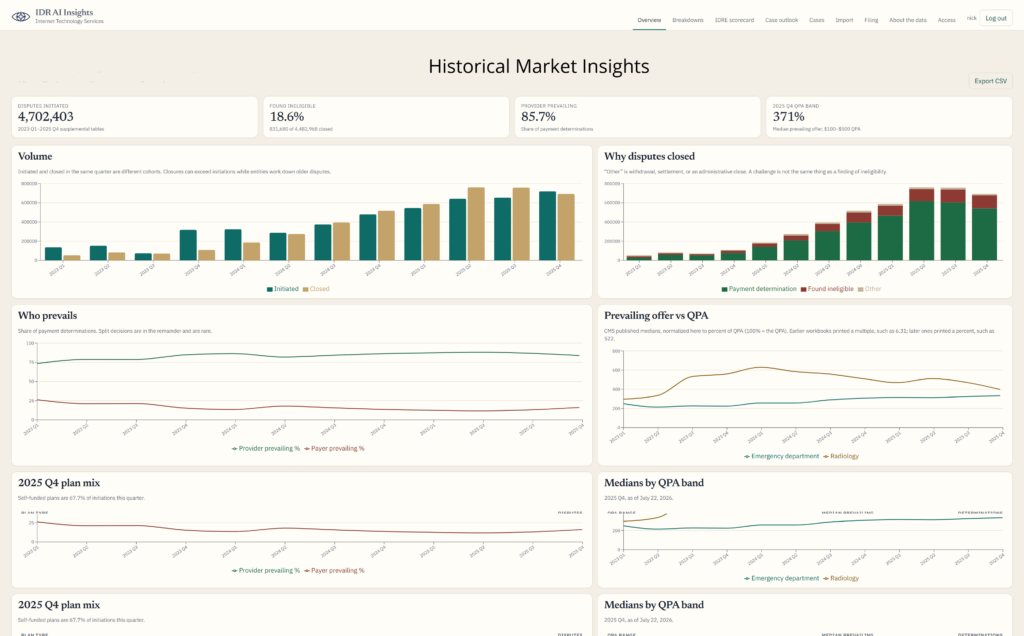
Today we’re introducing IDR Insight AI, a new tool from Internet Technology Services (ITS) for the federal Independent Dispute Resolution (IDR) process under the No Surprises Act. It helps providers, billing companies and their reps prepare, file and manage out-of-network payment disputes with health plans, faster and with fewer costly mistakes.
IDR Insight AI brings the latest AI technology to the IDR industry, backed by the engineering experience we’ve built since 2009 across more than 100 client projects from our base in Dana Point, California. We’re now preparing a pilot program with a small group of providers, and this post explains what we built, why, and how to get involved.
The current market
When the federal IDR process launched in April 2022, the Departments of Health and Human Services, Labor and the Treasury expected about 22,000 disputes in its first year. By June 2023 they had received nearly 490,000, according to the U.S. Government Accountability Office.
The volume never slowed. As of July 31, 2026, more than 7 million disputes had been initiated since the portal opened, including 2,145,850 in the first seven months of 2026 alone (CMS IDR reports).
Providers win most of the disputes that reach a decision. In the second half of 2025, providers, facilities and air ambulance providers prevailed in about 85% of payment determinations, and the prevailing offer was higher than the qualifying payment amount (QPA) in about 87% of them (CMS).
Where the market is heading
Volume is still climbing. Georgetown’s Center on Health Insurance Reforms (CHIR) reports that disputes rose 77% from 2024 to 2025 to 2.6 million, and that the first six months of 2026 reached 1.75 million, 50% above the same period of 2025 (Georgetown CHIR). CMS counted 394,140 disputes initiated in July 2026 alone, up 24% from June (CMS).
The rules are changing too. A federal IDR operations final rule published June 4, 2026 cut the administrative fee from $115 to $15 per party per dispute for disputes initiated on or after June 11, 2026. The cut is expected to make the process more accessible to smaller providers and facilities, and the Departments anticipate it may increase dispute volume. The same rule formalizes open negotiation notices, adds a hard cap of 50 items per batched dispute with a new “similar condition” batching test for open negotiations starting on or after November 1, 2026, creates a registry for plans and issuers, and requires standardized remittance codes that show whether a claim is subject to the No Surprises Act (Holland & Hart summary).
Costs are drawing scrutiny. The CHIR study estimates the IDR system cost $22.4 billion from 2022 to 2025, including $16.6 billion in 2025 alone, and notes renewed attention from policymakers (Georgetown CHIR; Medical Economics). The takeaway for providers: more disputes, new paperwork requirements and closer scrutiny all reward filings that are accurate, complete and on time.
The demand that isn’t being met
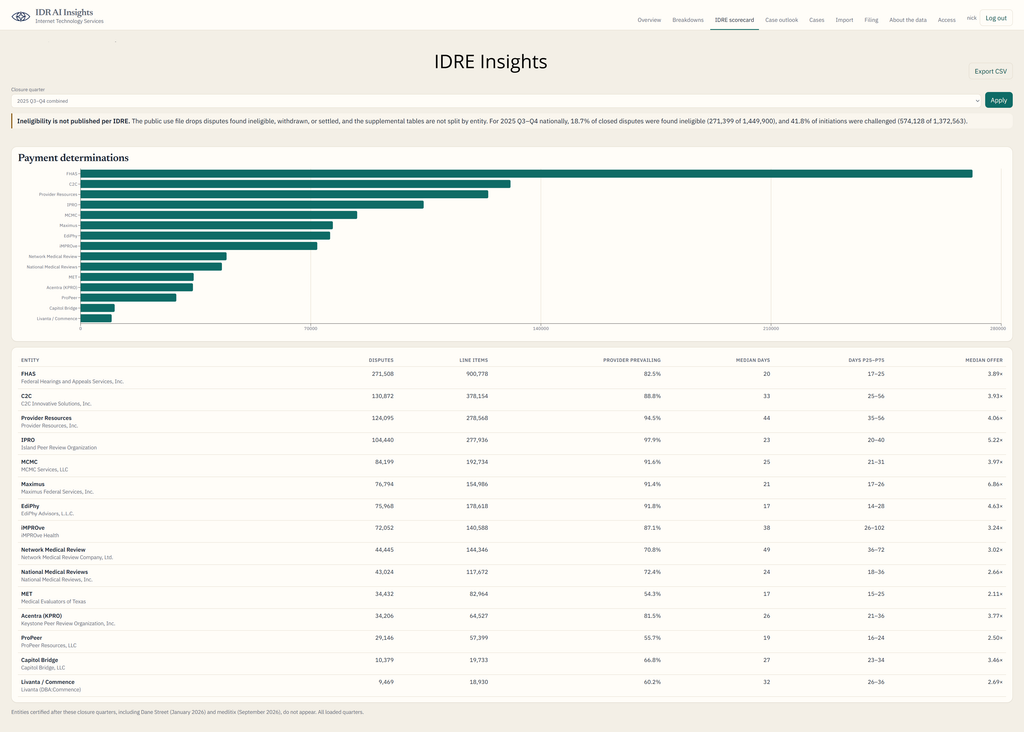
Eligibility is still the biggest stumbling block. Non-initiating parties challenged the eligibility of 42% of disputes in the second half of 2025, and about 19% were found ineligible, most often because of an unfinished 90-day cooling-off period or because the dispute belonged in a state process (CMS). Since April 2022, more than 1.16 million disputes have been closed as ineligible (CMS).
The process is also dominated by a few large players. The top ten initiating parties filed about 66% of disputes in late 2025 (CMS), and CHIR found that many smaller local practices aren’t using IDR at all. One of the study’s authors said navigating it takes resources most small practices lack, including familiarity with the federal portal (Medical Economics).
Labor is the hidden cost. The federal departments estimated plans’ and providers’ internal costs to submit IDR materials at $857 per dispute (Georgetown CHIR), and one software competitor puts manual filing at 25–40 minutes per claim (Sydra). With the administrative fee now just $15, staff time is the main thing keeping smaller providers on the sidelines.
How IDR Insight AI is different
IDR Insight AI was purpose-built for one job: getting federal IDR disputes right. It combines the latest AI technology with rule logic written specifically for the IDR process, and it works from your data rather than generic boilerplate.
- Fast AI judgment calls before you file. IDR Insight AI reviews each dispute for likely eligibility, the right service and code category, and missing evidence. Anything it isn’t confident about is flagged for human review instead of guessed at.
- Probability-based signals, not hunches. See how likely a dispute is to be worth filing, and where an offer sits relative to the QPA compared with how similar disputes have actually been decided.
- Arguments built from your case, not a template. Draft positions are assembled from your own case details and public CMS outcome data, so every packet reflects the actual dispute.
- Hard rules stay hard. Deadlines, batch limits, duplicate checks and out-of-scope services are decided by fixed rule logic, not left to interpretation.
The pricing model is different, too. Much of the outsourced IDR help on the market charges a contingency: a percentage of whatever extra you recover. Published rates range from 10% of the improvement over the payer’s initial offer (Claims Assassins) to “20 percent or more” as described by one software competitor (Sydra). In a services agreement filed with the SEC, HaloMD, one of the largest IDR filers, charged a client 20% of the net recovery on federal IDR awards, while the client still paid the IDR entity and CMS administrative fees up front (SEC filing). A June 2026 amendment lowered that to 16% for awards issued on or after July 1, 2026 (amendment).
Using the worked example in that agreement (written for a state arbitration claim, but the math is the same), a $2,000 award less a $100 initial payment, $100 patient responsibility and a $115 administrative fee leaves a $1,685 net recovery. At 20%, the firm’s fee is $337. At 16%, it’s $269.60 (SEC filing). Across 100 similar wins, that’s $26,960 to $33,700, and it grows with every dollar you win. Government fees, by contrast, are modest: the $15 administrative fee per party, and a certified IDR entity fee of $200–$840 for a single determination that the losing party pays (CMS; CMS entity fee list).
IDR Insight AI is built to be priced as software, not as a cut of your recovery, so the upside of a win stays with the provider.
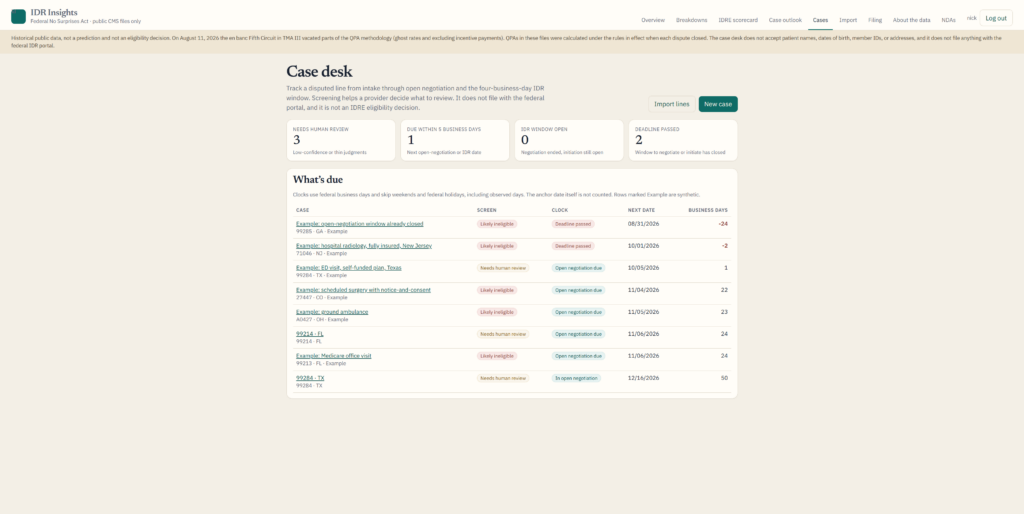
Feature highlights
- AI-drafted, paste-ready filings and evidence packets organized for the CMS IDR portal (CMS offers no public filing API, so you file in your own account and stay in control).
- Automatic deadline calculation in federal business days from your anchor date for open negotiation, IDR initiation, entity selection and offer submission.
- Built-in CMS and NUBC code sets: place of service, HCPCS codes and modifiers, bill types and revenue codes, plus CPT format checks.
- Date and price validation that catches problems before they become ineligibility findings.
- Forms that keep your work when a validation error appears.
- Batching and bulk import from CSV or Excel, with batch suggestions that follow federal rules.
- Case tracking for every open dispute, its status and its next deadline.
- Outcome insights from CMS public use files: historical win rates and typical prevailing offers relative to the QPA by service code, state and certified IDR entity.
Join the IDR Insight AI pilot
We’re looking for a few pilot partners to help us get IDR Insight AI up and running in real-world workflows. It’s a good fit if you’re an independent or specialty practice, a medical billing company or a revenue cycle management firm handling out-of-network claims.
What pilot partners get:
- Early access to IDR Insight AI before general release
- Hands-on onboarding and setup by our team
- Direct input on the product roadmap
- Founding-partner pricing, set together with us
What we ask in return:
- Real out-of-network dispute volume to run through the tool
- Honest, regular feedback on what works and what doesn’t
Ready to talk? Contact Nick Nguyen at ITS: call (949) 446-1716 or email its@InternetTechnologyServices.com. You can also request access at idr.internettechnologyservices.com.
Note: IDR Insight AI is a software tool, not legal advice. Consult qualified counsel about your specific disputes.
Sources: GAO-24-106335; CMS, Independent Dispute Resolution Reports; CMS, Supplemental Background on the Federal IDR PUF, July 1 – December 31, 2025; Georgetown CHIR, Aug. 2026; Medical Economics, Aug. 27, 2026; Holland & Hart, June 26, 2026; CMS IDR fee final rule fact sheet; CMS list of certified IDR entities; HaloMD–Nutex agreement (SEC); First Amendment to HaloMD–Nutex agreement; Claims Assassins; Sydra.
A free tool for people who text themselves out of getting laid.
You know that moment.
They’re warm. The vibe is there. You might have even got the half naked selfie, your pretty much in..
Then your thumbs clock in overtime.
“hey just checking in lol”
“wait did I say too much”
“ok last one I swear”
“haha ignore that”
Congrats. You didn’t get ghosted by them. You got ghosted by you.
What Ive built is an AI dating coach integrated into your text messaging/SMS to help keep the vibe flowing
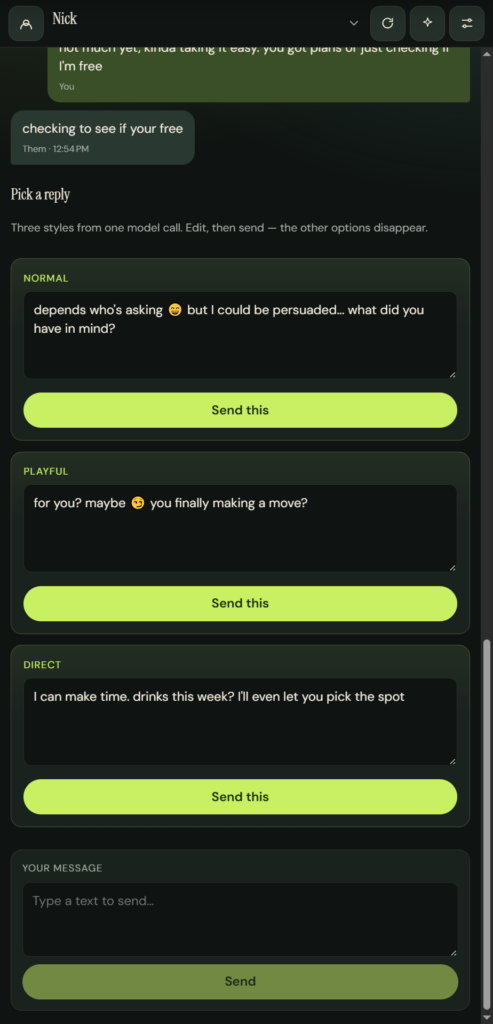
What it does
Sits between you and your SMS dating life (using the popular and free phone service GV (G00G13 V01C3) , because US SMS is a compliance maze and this is the cheap workaround)
Helps you draft replies that sound like a person who has options, not a person refreshing their phone every 90 seconds
Comes with PUA-leaning defaults if you want that energy
Lets you teach the AI who you are (age, work, interests) system-wide
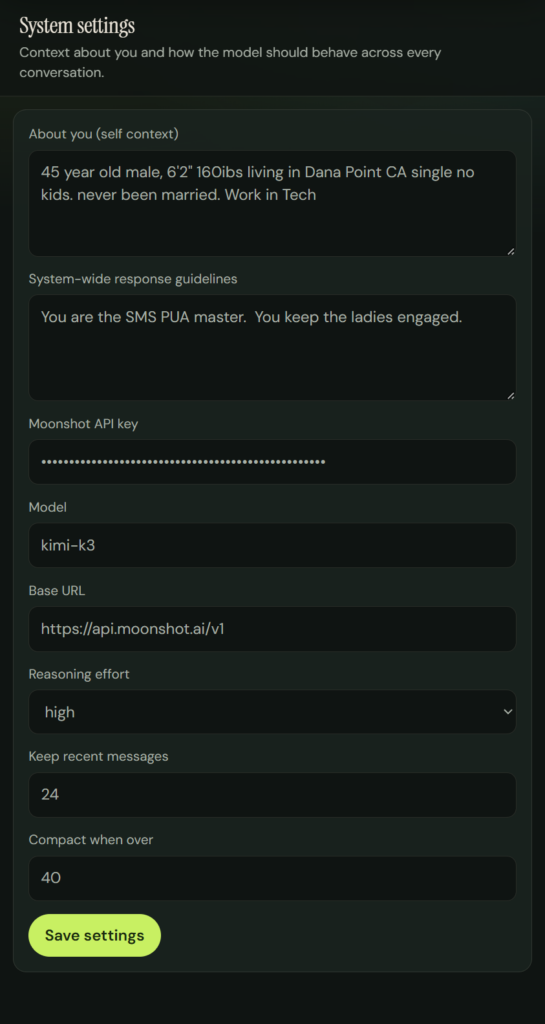
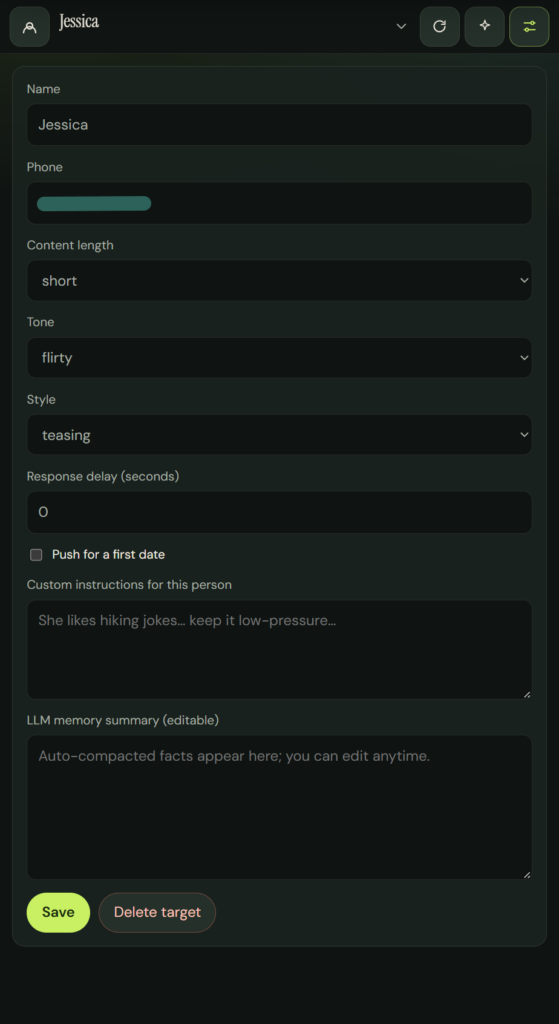
You can sculpt how it handles each person your talking to as well.
Remembers each conversation (and you can edit that memory when it gets weird)
Gives you drafts so you can send something that doesn’t smell like panic
What it is not
It is not real time carrier SMS. It is a hack.
Scraping / syncing / sending takes longer.
If you’re technical, you can get it running on a cheap Linux VPS and an LLM account for damn near free
The hardest part is remote login to GV (VPS + VNC). After that, it’s a breeze.
If GV updates there web ui selectors die, hopefully the community patches them. Open source exists for a reason.
Who this is for
You write novels when “sounds good” would have worked
You have lost nights you were winning because your follow-up needed a follow-up
You want coaching energy without paying $300/hr for someone to say “wait longer”
Who this is not for
Anyone looking for a polished SaaS with a ToS longer than your last situation ship
Anyone who needs carrier-grade instant delivery
Anyone who thinks AI should auto-send their entire personality unsupervised (you still hit send)
This does require a server and technical skills to get up and running detailed instructions are in the repo. Those that arent technically inclined and have the discretionary funds can hire me to install it for them.
SMS wingman is free and opensource: Download SMS Wingman
If it helps you get a date: tip, donate, or hire us
Featured Project: Belvedere AI -Your Phone, Answered — Even When You Can’t
Most small businesses don’t lose leads because their product is bad. They lose them because the phone rang once, hit voicemail, and the caller moved on.
I’ve seen that pattern for years building sites and systems for local shops. The front door of the business isn’t always the website — it’s whoever answers (or doesn’t) when a real customer calls.
That’s why I built Belvedere AI.
Belvedere is an AI phone butler. It answers in a natural voice, handles the conversation, and leaves you a recording and transcript so you’re never starting from zero. It works with the number you already have. No new phone line to remember. No hardware. No “press 1 for sales” maze.
The problem Belvedere solves
For business owners: You’re on a job, with a client, or after hours. The phone rings. Voicemail. That lead often never calls back — especially if they’re comparing two shops and the other one answered.
For individuals: You don’t want every unknown number. Scammers are getting better at sounding human — including AI-cloned voices that can mimic someone you know. Gut instinct alone isn’t the filter it used to be.
Belvedere sits in front of your calls and handles both: capture the real ones, screen the sketchy ones, and brief you before anything connects when that’s what you want.
What every Belvedere does
- Sounds human — real conversation, not a menu tree
- Keep your number — call forwarding; nothing to port or install
- Recordings & transcripts — review when you have a minute
- On when you want it — flip on/off from your phone in seconds
- Preview before you go live — hear it handle a call first
- Live in minutes — pick a voice → forward → go live
Personal vs business
Personal is for individuals: caller-specific handling, casual tone, control over who gets through.
Business answers as your company — professional receptionist tone, tuned to capture who called, what they need, and how to follow up, including around the clock. It can answer common service questions, help with availability/booking, and take a clean message when it shouldn’t connect yet.
Scam & unknown-caller screening
Every caller explains who they are and why they’re calling. Familiar voices and Caller ID aren’t trusted alone. Urgency (“IRS,” tech support, family emergency) doesn’t get a free pass. Belvedere never asks for passwords, PINs, OTPs, SSNs, or card numbers — and treats callers who push for those as a red flag. After screening it can privately brief you; the call connects only if you say yes. When something’s off, it takes a message and ends the call safely.
Setup in three steps
- Pick a voice (clone yours or use a ready-made one)
- Forward your number
- Go live
Flat pricing with included minutes; more minutes in one tap if you need them. Cancel anytime.
Try it
Belvedere: https://belvedere.internettechnologyservices.com Screening: https://belvedere.internettechnologyservices.com/security
Case Study: GuideToRide.com Vibe Coded
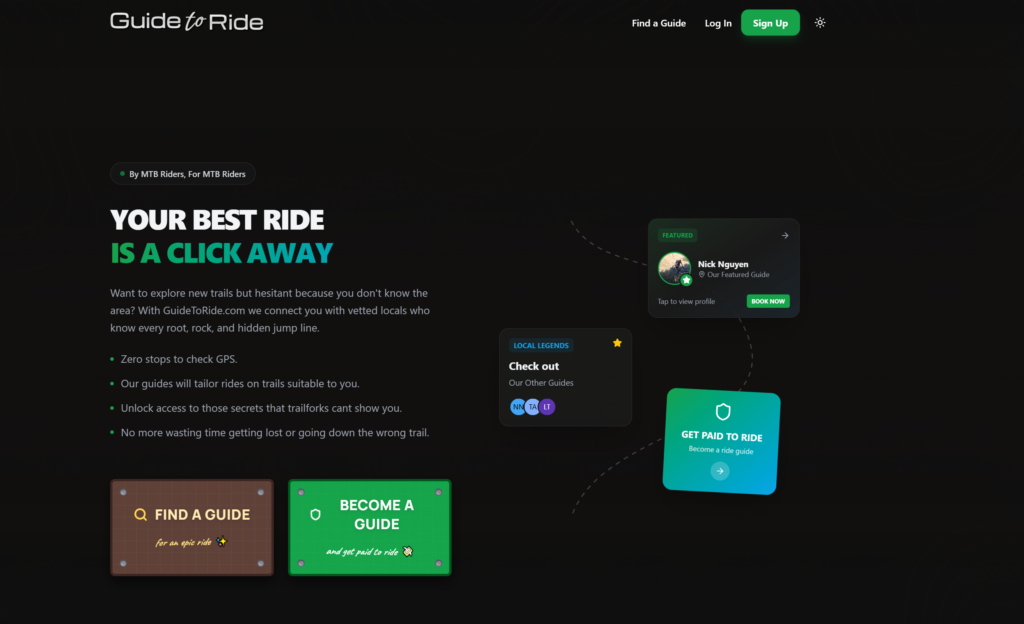
I code a robust marketplace with AI
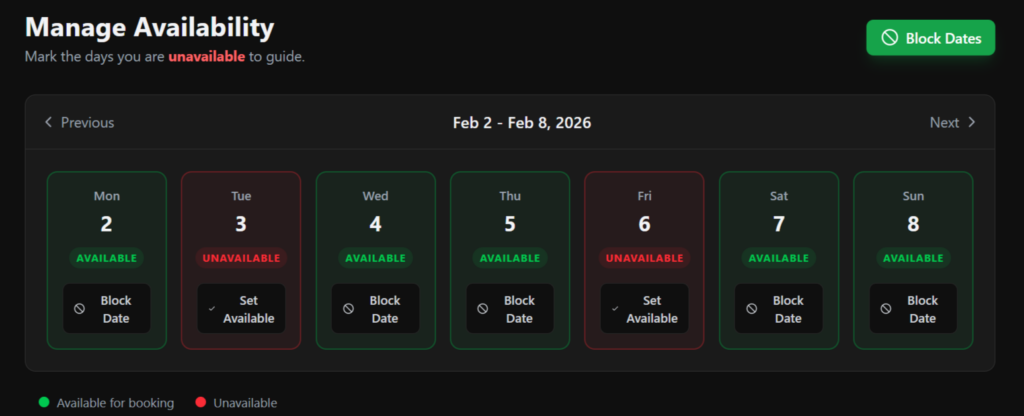
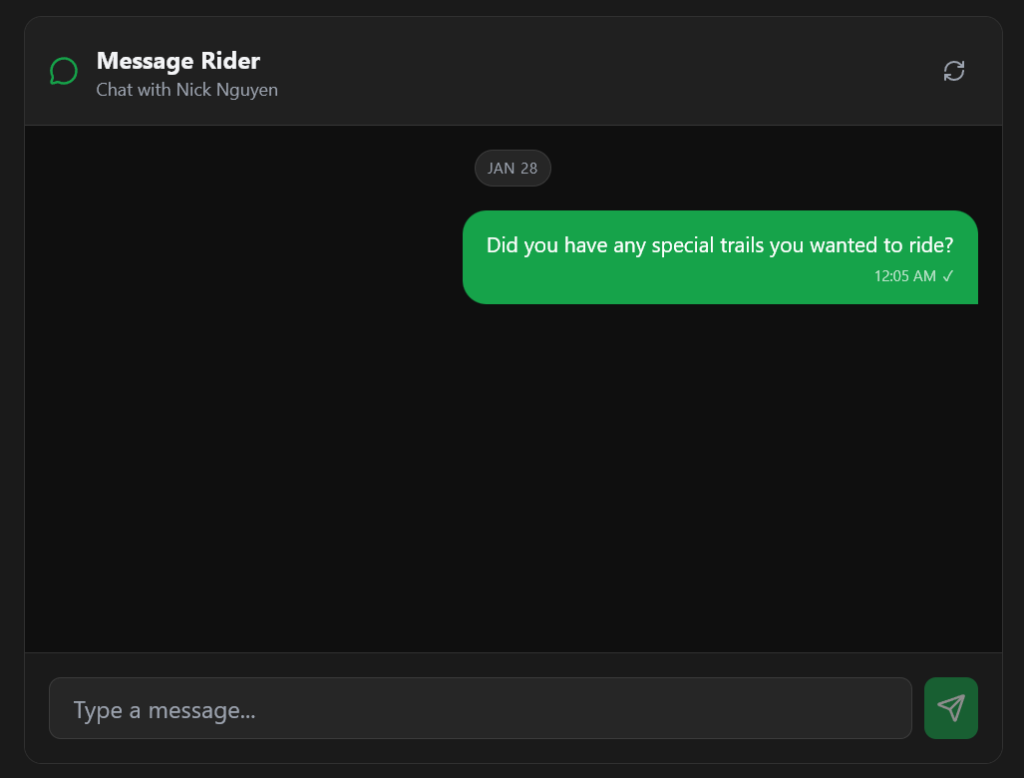
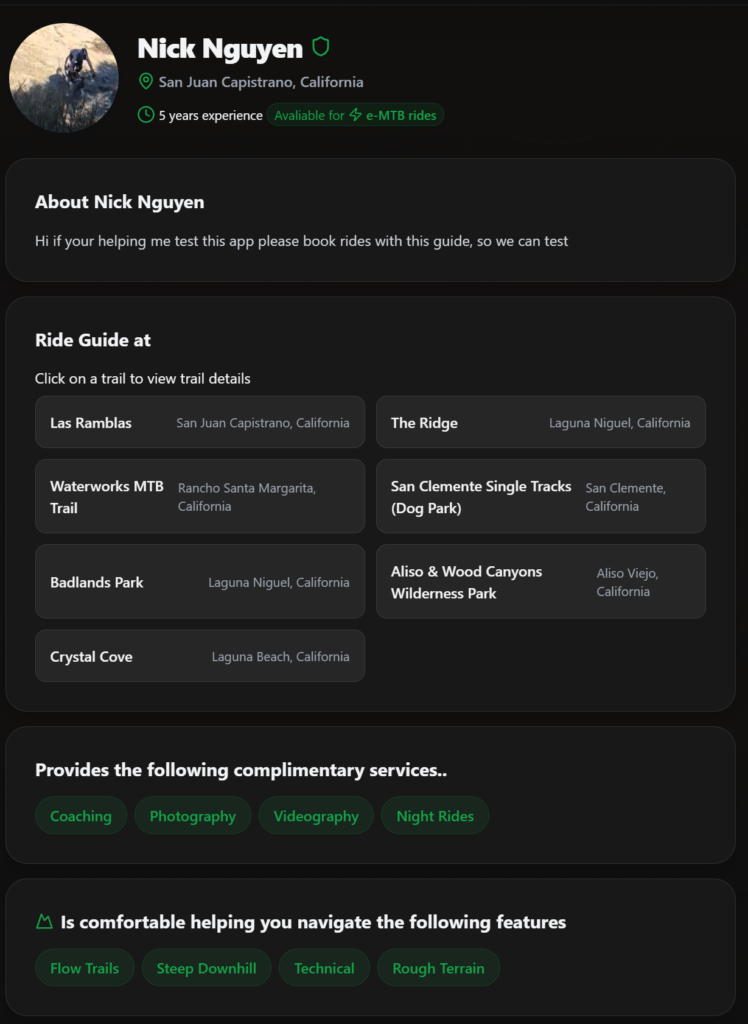
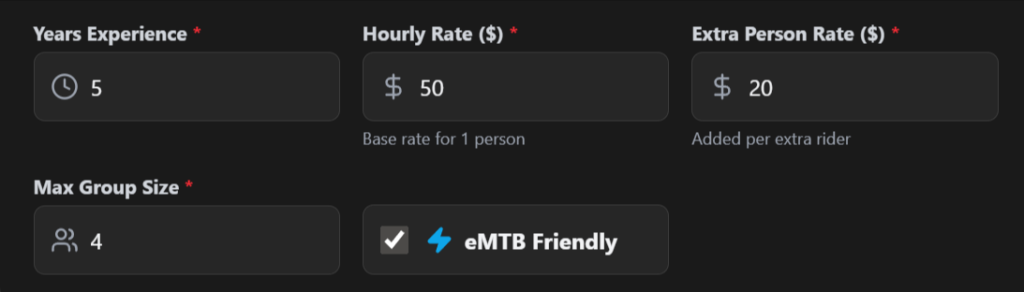
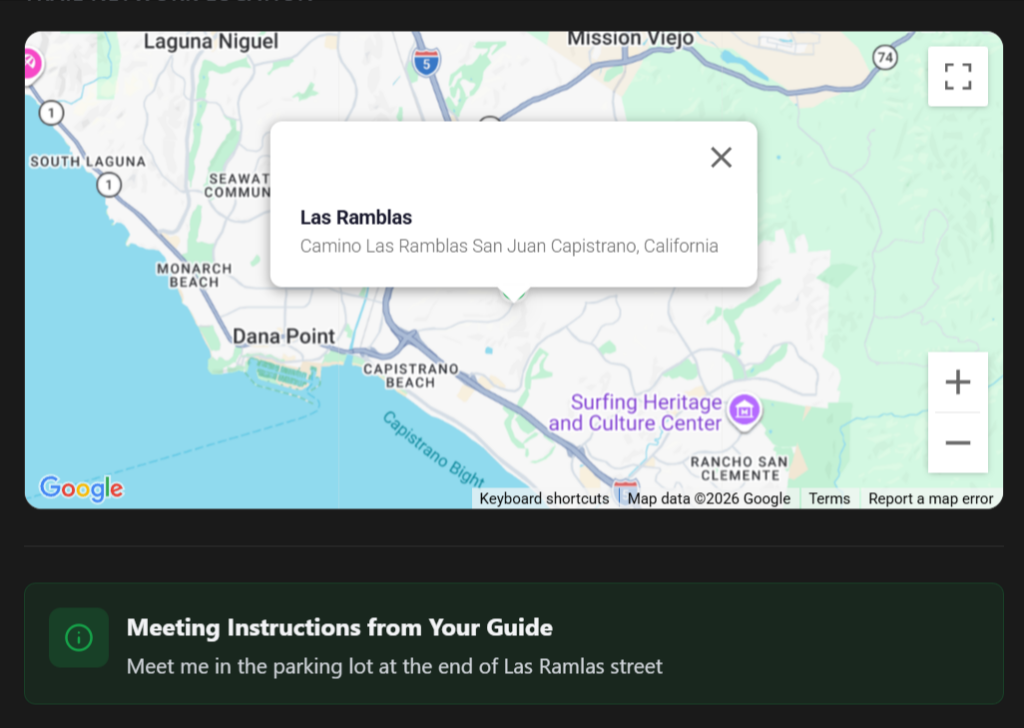
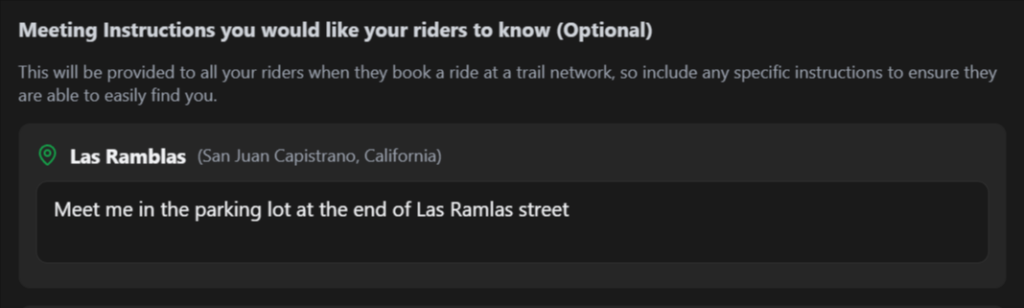
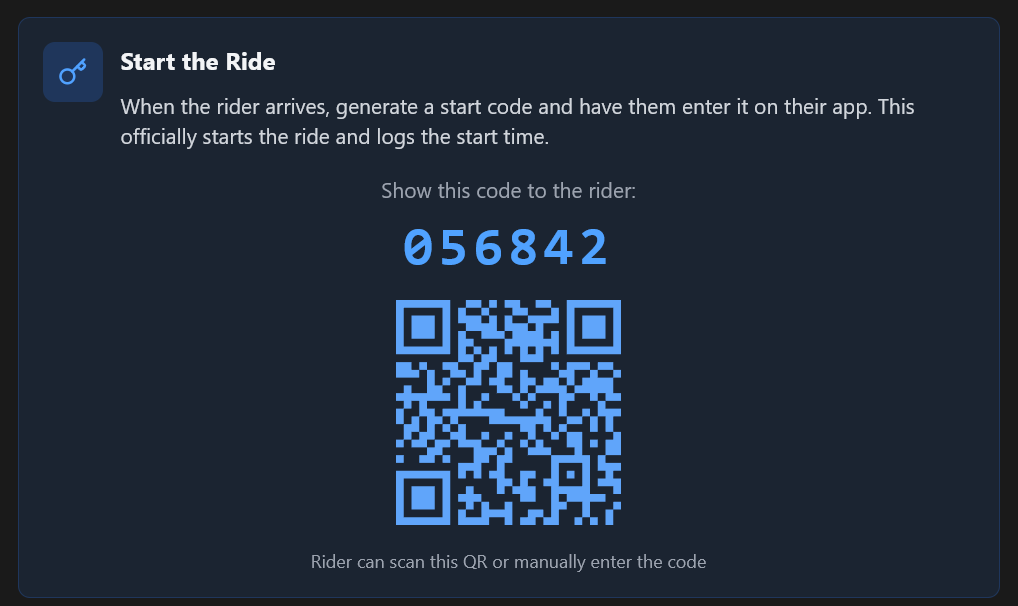
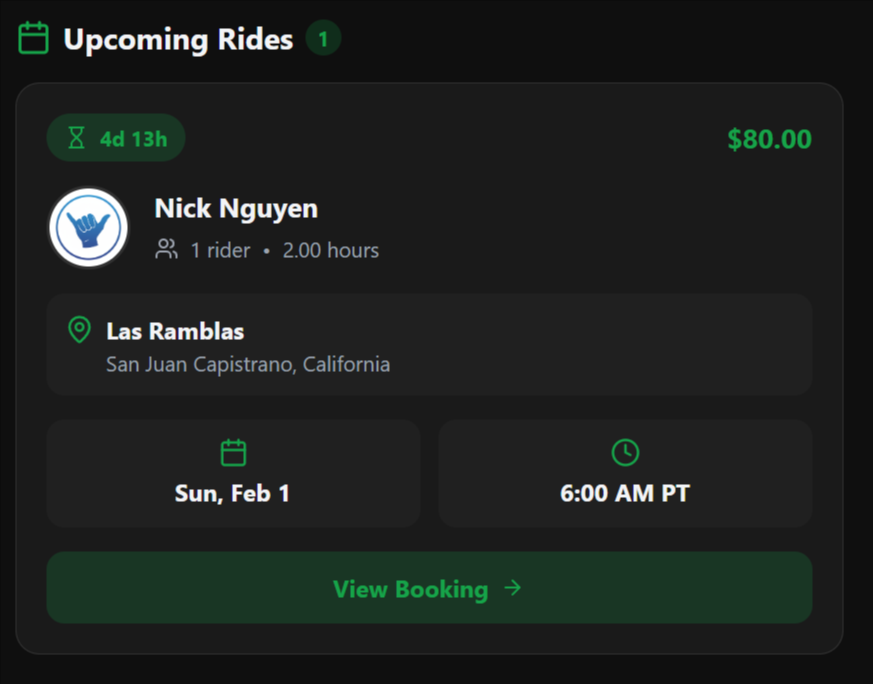
As a passionate mountain biker who loves exploring new trails, I found it challenging, and initially most of my time was spent getting lost. Along the way, I realized having a local show me around makes a huge difference in the fun factor of the ride. So I created guidetoride.com to address a common pain point for riders, with the solution being to connect riders with locals, removing the friction for exploring riders associated with exploring new trails, meanwhile supporting local community riders.
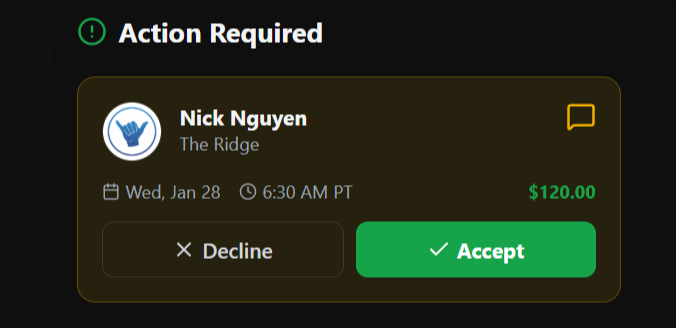
I gave up along the way, the technology wasn’t there yet. Anthropics’ Claude was the game changer; working with AI felt like I was collaborating with a senior-level developer. The most remarkable aspect was that AI didn’t require small talk and was available to work 24/7, which made the development process incredibly enjoyable and efficient. Initially, I encountered some minor mistakes—like variable names being incorrect or functions not quite aligning with my intentions. However, as the technology evolved, so did my AI partner’s capabilities.
Over time, it began making thoughtful recommendations that enhanced the coding process. While Claude was busy scripting, I seized the opportunity to immerse myself in learning about new tech stacks and APIs. This knowledge allowed me to effectively direct my AI partner in the implementation of various features. I found myself not just coding, but educating myself on how to optimize the development process.
In my quest for efficiency, I automated my workflow significantly. Implementing Docker streamlined my application environments, and I adopted a meticulous Git workflow to manage my code versions effectively. Leveraging AWS services like ECR and App Runner enabled me to achieve one-click deployments, significantly cutting down the time to launch updates.
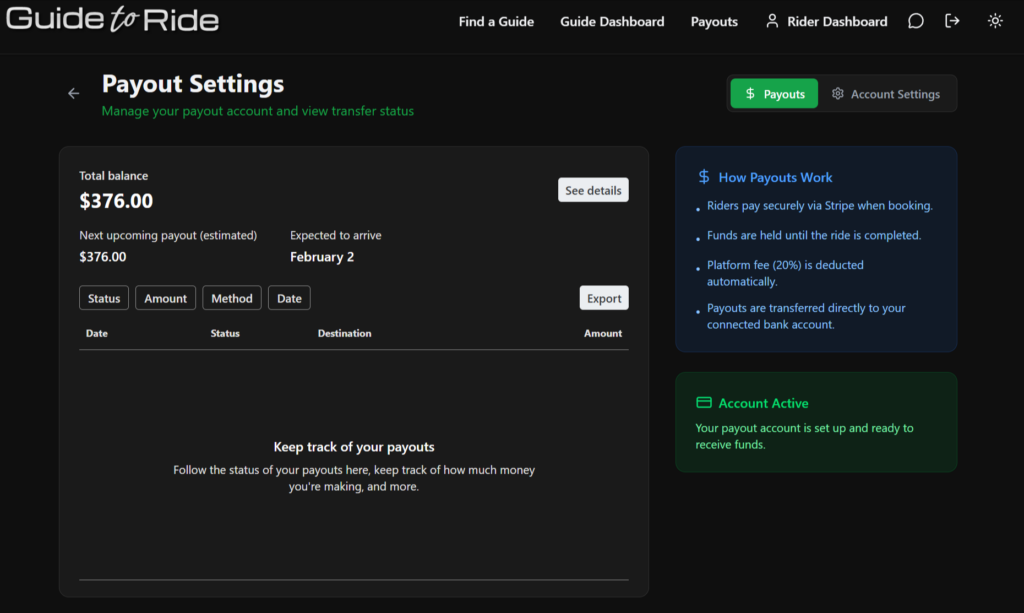
Additionally, I automated payment distribution through Stripe Connect accounts, which simplified the financial transactions related to the project. I also integrated Amazon S3 to serve the front end, ensuring fast and reliable access to static resources. To manage the connection between the backend and frontend efficiently, I utilized CloudFront, which provided low-latency delivery of my content.
This comprehensive automation of my development workflow has allowed me to focus on innovation rather than operational concerns. I no longer have to worry about scaling servers in production; the infrastructure I’ve built is robust and adaptable. The combination of an intelligent AI partner and a well-structured, automated system has transformed my approach to development, ultimately making the process smoother and significantly more productive.